
AI Transforming Architecture and Boosting Power Needs in Automated Warehouses.
 Artificial Intelligence (AI) is radically reshaping architectural practices and industrial warehousing. In architecture, AI is enhancing design processes through tools like generative design, which quickly create optimized building plans by considering various factors such as cost, material properties, and sustainability. This technology streamlines workflows, allowing architects to explore countless design possibilities in a fraction of the time traditionally required. Furthermore, AI’s integration with Building Information Modeling (BIM) provides precise project management capabilities, ensuring construction projects stay on schedule and within budget while minimizing waste.
The influence of AI extends beyond design and project management to the development of smart cities, where it plays a critical role in urban planning, traffic management, and improving building energy efficiency. This leads to more sustainable and livable urban environments. Additionally, AI allows for greater customization in architecture, offering personalized design solutions tailored to individual client preferences.
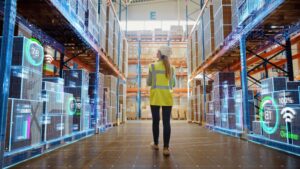
In the realm of industrial warehousing, AI-driven automation is revolutionizing operations. Automated systems, controlled by AI, optimize everything from inventory management to robotic handling, enhancing productivity and reducing errors and operational costs. However, the shift towards automation comes with a significant increase in electrical demand. The continuous operation of automated systems, including conveyors and robotic arms, requires a robust electrical infrastructure to support this heightened energy consumption.
To address these challenges, many warehouses are adopting sustainable energy solutions such as solar panels and wind turbines, with AI playing a pivotal role in optimizing energy use and distribution. AI also enhances climate control within warehouses, ensuring optimal conditions while minimizing energy consumption. Predictive maintenance powered by AI further ensures the efficient operation of warehouse equipment by monitoring for potential issues and scheduling maintenance proactively, thereby preventing costly downtime and extending equipment lifespan.
In conclusion, AI is profoundly transforming both architecture and industrial warehousing. It is enhancing design, project management, and operational efficiency while also driving up energy demands. Balancing this innovation with sustainability is crucial as we move towards a future characterized by smarter, more efficient, and environmentally responsible infrastructure.
Sources:
- McKinsey & Company. “How AI is Transforming Architecture and Construction.”
- International Energy Agency (IEA). “Energy Efficiency in Automated Warehouses.”
- Harvard Business Review. “The Future of Industrial Warehousing with AI and Automation.”
For more information about Pioneer Architecture and its services, visit their website at PioneerArchitecture.com